
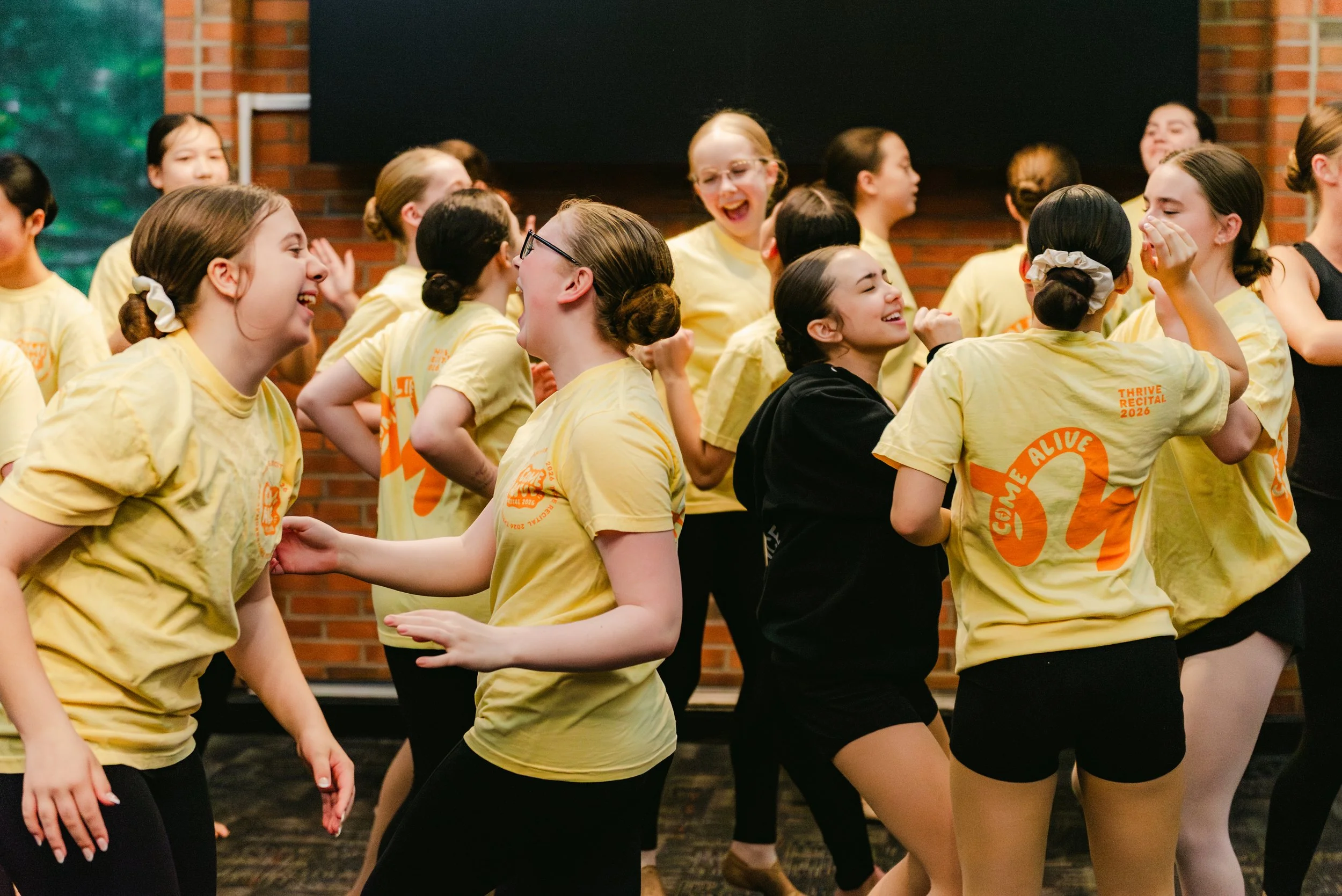
Level Placement
At Thrive, level placement is one of the most intentional things we do. We know it can bring up questions for dancers and parents alike. This page is here to give you a clear, honest look at how we make placement decisions, what we are looking for in each dancer, and why we believe every level in our program offers something valuable.
We hope that by the end of this, placement feels a little less like a verdict and a little more like what it actually is: a considered, collaborative decision made by people who know your dancer and care deeply about their growth. At the end of the day, know that we share your same goal - for your dancer to grow, be challenged and enjoy their experience. We are for you!
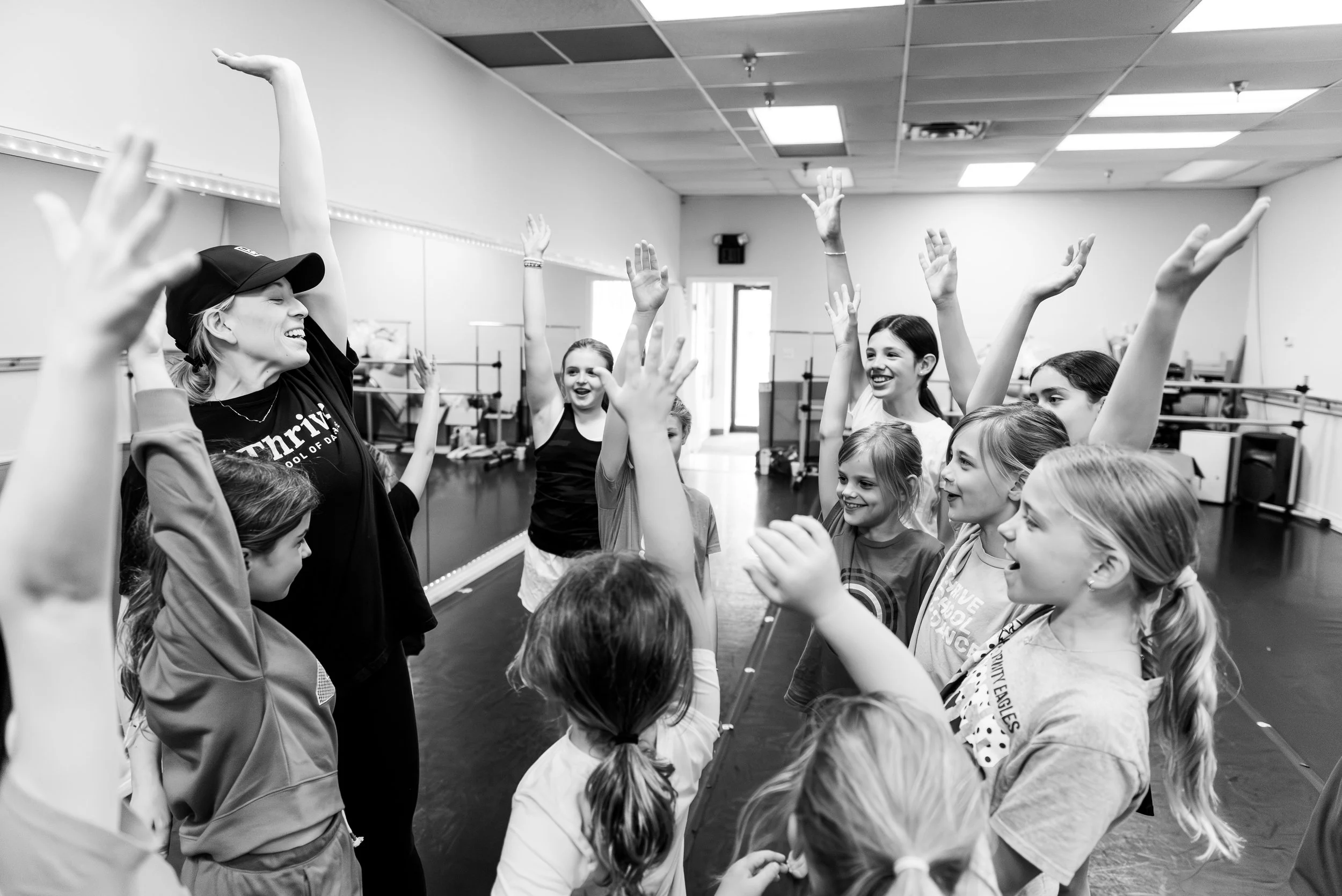
How Placement Decisions are Made at Thrive…
The How + WhyPlacement is never a snap judgment, and it is never made by one person.
Our teachers meet as a team to talk through every dancer individually. These conversations draw on what we have collectively observed over the course of a full season: how a dancer shows up week to week, how they respond to challenges, how they engage with their peers, and how they have grown — not just technically, but as a person in the room.
We consider:
Technical skill and body awareness
Consistency and work ethic over time
The ability to receive and apply feedback consistently
Confidence, maturity, and classroom presence
Readiness for new challenges, and readiness to go deeper in the current ones
We look at patterns over time, not a single performance or moment. A dancer who has a hard week, or even a hard month, is seen in full context. So is a dancer who makes a quiet but significant leap partway through the season.
These decisions are made with care, with expertise, and with your dancer's long-term growth as the only goal.
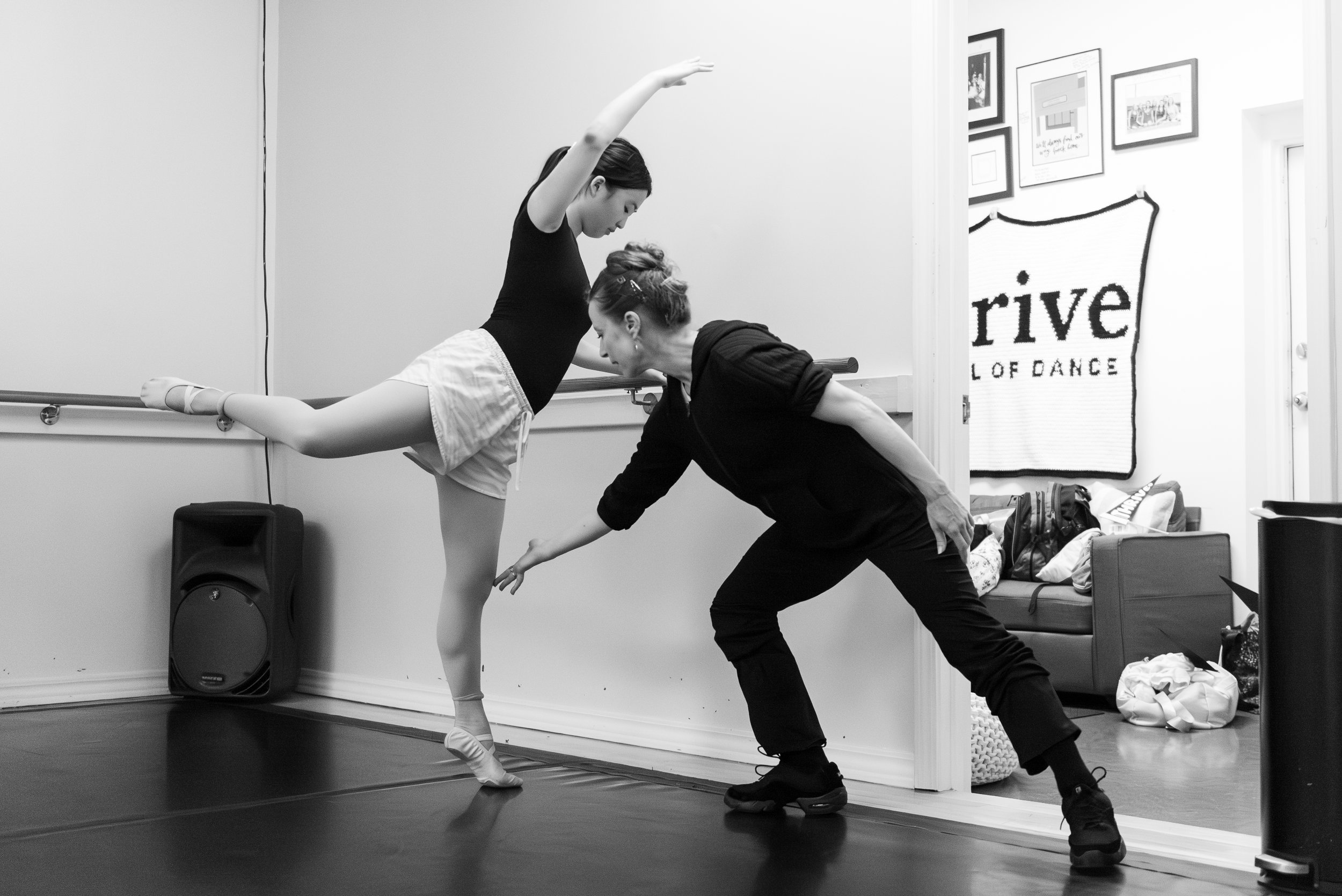
What We Are Looking for + Why
The How + WhyOur placement criteria are not arbitrary. They are rooted directly in the values we hold for every dancer at Thrive.
Purposeful Training and Professional Growth We look for dancers who are engaged and intentional in class — not perfect, but present. A dancer who is consistently showing up, trying, and applying what they are learning is demonstrating exactly the kind of growth we value and want to encourage.
Community over Competition How a dancer shows up for their peers matters. We notice whether dancers encourage each other, take ownership of the energy in the room, and treat the studio as a shared space. Leadership and generosity are qualities we look for, especially at more advanced levels.
Safety with Intention Is a dancer ready (physically, emotionally, and mentally) for the next set of demands? Readiness is not just about being able to execute a skill. It is about having the foundation to do so safely and sustainably. We never want to push a dancer into territory that could compromise their body or their confidence.
Integrity We look for honesty in effort. A dancer who gives their genuine best, even when it is hard, even when no one seems to be watching, is demonstrating something we value far more than natural ability alone.
Joyful Ownership We want to place dancers where they will feel real ownership over their training — where the material challenges them in a way that builds pride and investment, not frustration or defeat.
Humble Confidence Our goal is to place every dancer where they can grow into greater confidence. That sometimes means staying at a level to deepen foundations. It sometimes means stepping into something new. Both are valid. Both are considered progress here.
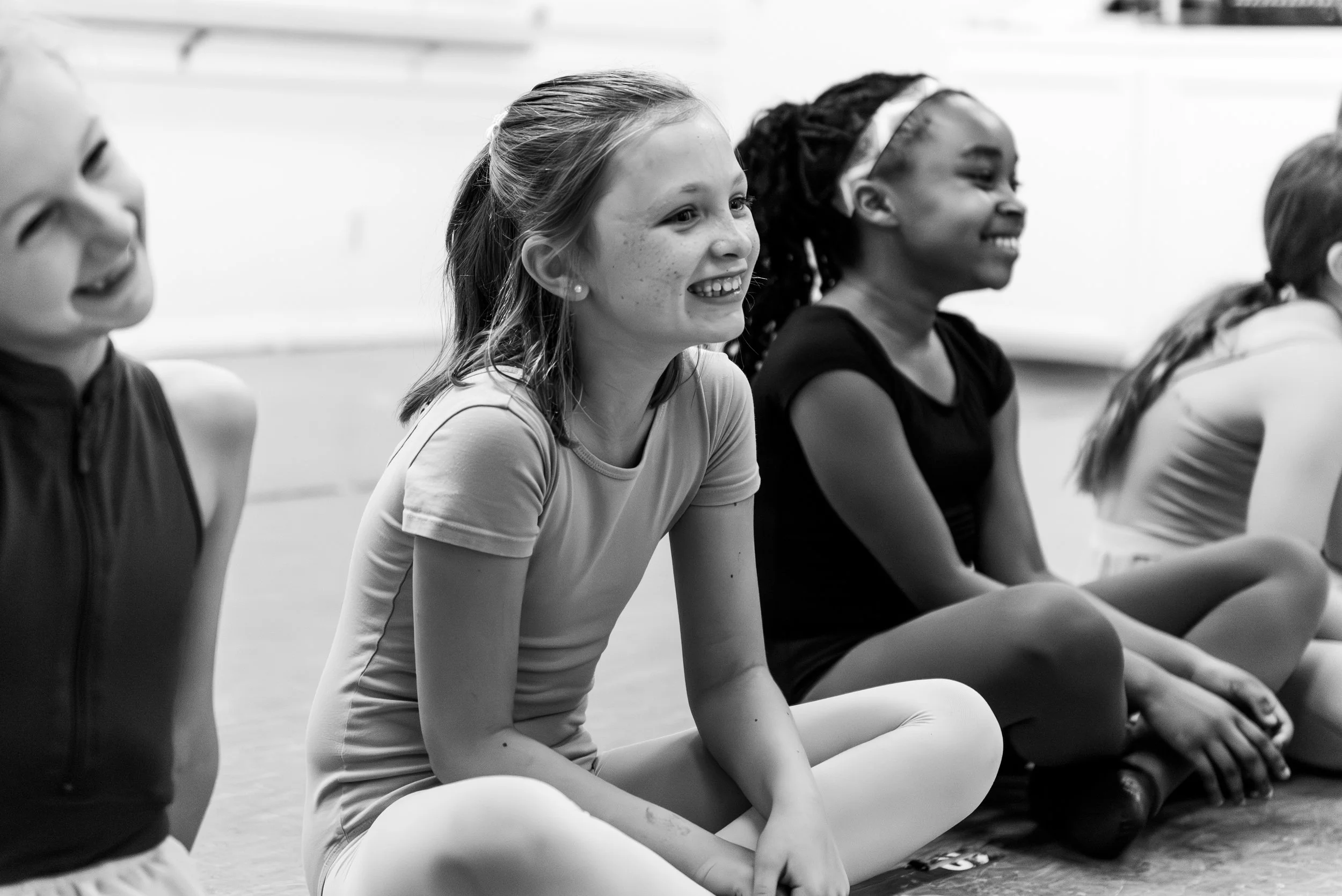
A Note on Levels and What They Actually Mean…
The How + WhyLevels at Thrive are not a ranking. They are not a measure of worth, talent, or potential.
They are a way of grouping dancers so that each class can be taught well — with material that is appropriately challenging for the people in the room. That is it.
Our teachers build the curriculum for each class based on the dancers who are actually in it. Every year looks different. There have been years when a class at one level was working on more technically demanding material than a class at the level above it, simply because the dancers in the room were ready for it. The level name does not determine the quality or depth of the training. The dancers in the class do.
Wherever your dancer is placed, they are going to be taught well, challenged appropriately, and seen clearly by teachers who know them.
Your Dancer's Path at Thrive
-
Our youngest dancers begin in age-based classes that build strong foundations in ballet and tap. We focus on these two styles early because they develop skills that transfer across everything else: musicality and rhythm, pattern recognition, fine motor development, and the confidence that comes from learning to work in a structured, creative environment.
Levels include:
3 to 4's Class
4 to 5's Class
5 to 6's Class (typically kindergarten age)
6 to 7's Class (1st and 2nd grade)
7 to 9's Class (2nd and 3rd grade, with flexibility)
Most of these classes meet for one hour. The 7 to 9's class meets for 1.5 hours and introduces jazz. Dancers in the 6 to 7's and 7 to 9's levels also have the opportunity to explore hip hop, acro, modern, and musical theater through our community classes — six-week style-specific sessions offered in the fall and spring.
From here, dancers move into placement-based technique levels.
-
These levels are placement-based. Readiness — not age — determines when a dancer enters and moves through them. We consider technical ability, consistency, mindset, and maturity. Most dancers spend one to two years at each level, and both timelines are completely normal.
Levels include:
Intermediate
Advanced Intermediate
Classes meet once per week for two hours: one hour of ballet, 30 minutes of tap, and 30 minutes of jazz. Dancers in these levels also have access to our community classes in additional styles.
-
These levels are for dancers who are ready for deeper commitment, greater versatility, and increased leadership within the studio community. Training becomes more individualized, with scheduling shaped by each dancer's goals and availability.
Company progression:
Foundations
Junior Company
Senior Prep
Apprentice
Senior Company
We currently offer ballet, tap, jazz, pointe, modern, and hip hop at the company level. Some dancers in these levels are preparing for auditions or college programs. Others simply want to train at a high level with peers who share that commitment. Both are welcome here.
Supporting Your Dancer Through Placement…
The How + WhyThe most helpful thing a parent can do is stay grounded — and let your dancer take their cues from you.
If your dancer is excited about their placement, celebrate that with them. If they are disappointed, let them feel it without rushing to fix it. Acknowledge the feeling, and then gently help them zoom out. A placement decision is one moment in a much longer journey.
A few things that are worth remembering:
Staying at a level is not falling behind. Depth takes time. Some of the most significant growth a dancer experiences comes in a season spent deepening what they already know — because they have the space to truly master it.
Comparison will not help. Every dancer in our program is on their own timeline, and those timelines are not interchangeable. What is right for one dancer is not a benchmark for another.
We are always available to talk. If you have questions about your dancer's placement, we welcome that conversation. We want you to understand our thinking, and we want to partner with you in supporting your dancer's goals. Reach out anytime.
FAQs
How are placements decided?
Our full teaching staff meets and discusses every dancer as a team. We draw on a full season of observation — technique, consistency, work ethic, maturity, and growth patterns over time. No placement is made by one person, and no placement is made lightly.
Can my dancer take classes in more than one level?
Sometimes, yes. Some dancers are placed in a primary level with the opportunity to take select classes in another, based on teacher recommendations, space availability, and readiness in specific styles. We will note this in your dancer's placement communication if it applies.
Why didn’t my dancer move up?
In most cases, dancers spend one to two years at each level. Spending additional time in a level is not a setback. It is often exactly the right next step. Depth, leadership, and technical refinement take time, and a dancer who remains at a level is continuing to grow. Our teachers also build the curriculum fresh for the dancers in the room each season, so your dancer will not simply be repeating what they have already done.
What if my dancer is feeling discouraged?
We genuinely care about how your dancer is feeling, and we are here to support both of you. If your dancer is struggling with their placement, reach out and we will find time to talk — with you, with your dancer, or both. Our goal is always for your dancer to feel seen, supported, and excited about what is ahead.
Can I request a different placement?
We are always open to conversation, and we want families to feel heard. That said, placements are made from a full-picture perspective and are generally final — not to limit your dancer, but because we are confident we are placing them where they will grow best. If you would like to talk through our thoughts, we are happy to set up a time to connect.
What if my dancer is older than others in their level?
This is completely normal, especially at the intermediate and company levels. Dancers are grouped by readiness, not birth year. Being one of the more experienced dancers in a class is often a real asset — both for the dancer's own growth and for the community they help create.